The Maritime History of Marsaxlokk
Marsaxlokk (pronounced mar-sa-SHLOKK) has been a harbour for as long as people have sailed the Mediterranean. Its name literally means "harbour of the sirocco" — the hot wind that blows from the southeast — and its deep, sheltered bay has provided anchorage since prehistoric times. Archaeological evidence suggests Phoenician traders used this bay as early as the 9th century BC, and in 1565, the Ottoman fleet anchored here before the Great Siege.
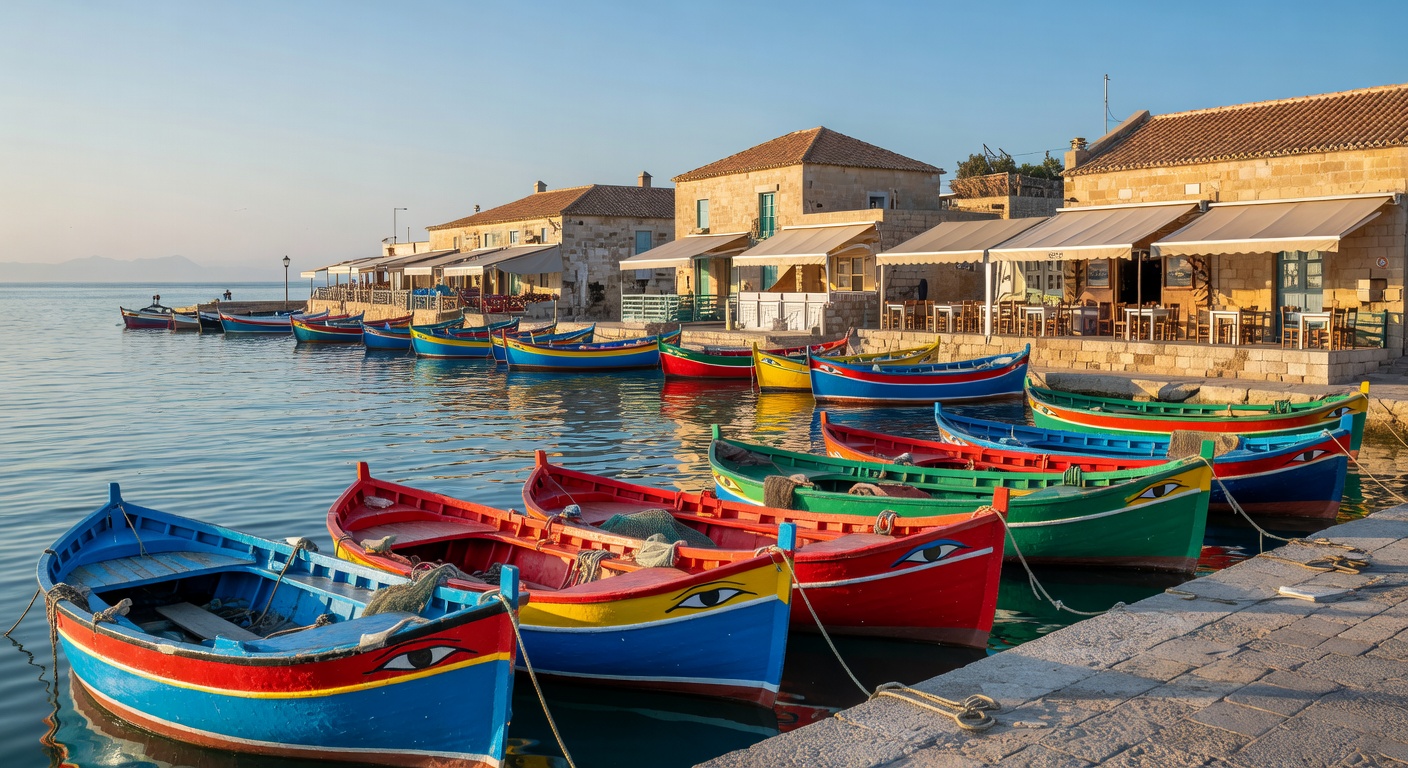
But Marsaxlokk's real story is one of fishing families. For generations — centuries, even — the village has been defined by its relationship with the sea. The traditional luzzu boats that line the harbour are direct descendants of ancient Phoenician vessels, and the Eye of Osiris (or Eye of Horus) painted on each bow is a superstition that stretches back thousands of years, believed to protect fishermen from harm. Today, Marsaxlokk remains Malta's most important fishing port, landing the majority of the national catch.
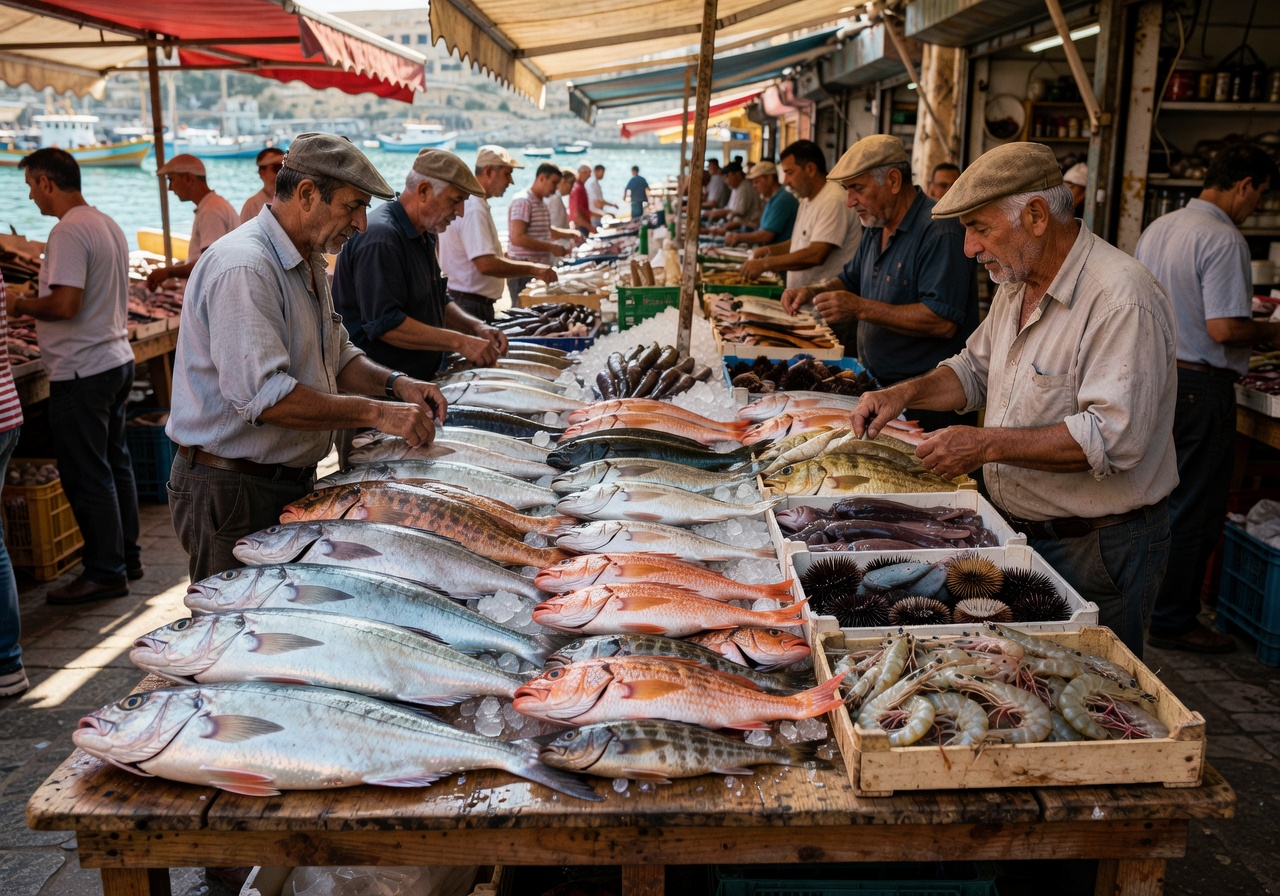 The Sunday fish market — a Maltese tradition that draws locals and visitors alike
Why Marsaxlokk Captivates Every Visitor
There are few places in the Mediterranean that look as immediately captivating as Marsaxlokk harbour. The waterfront is a canvas of colour: dozens of traditional luzzu boats painted in vivid combinations of red, yellow, green, and turquoise bob gently in the sheltered bay. Behind them, a row of low-rise buildings houses seafood restaurants, each with tables set right at the water's edge. The Parish Church of Our Lady of Pompeii, with its grand dome, rises as a backdrop. It's photogenic from every angle, at every time of day.
But Marsaxlokk isn't just a pretty face. It's a living, working fishing village where the daily rhythms haven't fundamentally changed in generations. Fishermen still mend nets on the quayside. The morning catch still determines the restaurant menus. And on Sundays, the village transforms into an enormous, buzzing open-air market that is as authentically Maltese as anything you'll experience on the islands.
Best Things to Do in Marsaxlokk
- The Sunday Fish Market: This is the main event. Every Sunday morning, the entire waterfront becomes a sprawling market selling fresh fish (swordfish, tuna, lampuki, octopus), local produce, honey, lace, souvenirs, and street food. Arrive by 8–9 AM for the best selection and atmosphere.
- Eat Fresh Seafood Harbourside: Choose any of the waterfront restaurants and order the catch of the day — grilled simply with lemon, olive oil, and capers. Tartarun, La Nostra Padrona, and Ir-Rizzu are local favourites.
- Photograph the Luzzu Boats: The harbour is most photogenic in the early morning and late afternoon when the light is warm and the water calm. Get low to the water for reflections.
- Walk to St. Peter's Pool: About 20 minutes on foot from the village, this natural swimming pool carved into the limestone coastline is one of Malta's best (and free) swimming spots.
- Visit the Daily Market: Even on non-Sunday days, a smaller daily market operates on the waterfront, and the village is considerably quieter — perfect for a more relaxed visit.
- Explore the Parish Church: The Church of Our Lady of Pompeii, with its striking red dome, is worth stepping inside for its painted ceilings and the cool, incense-scented interior.
Best Time to Visit Marsaxlokk
Sunday morning is the quintessential time — the fish market is in full swing from around 7 AM to 1 PM. For a quieter experience, visit on a weekday morning when the harbour belongs to the fishermen. The annual Feast of Our Lady of Pompeii in late September or early October sees the village decorated with lights, banners, and fireworks in a spectacular celebration of community and faith.
Seasonal note: The lampuki (dolphin fish) season runs from September to November, and this is when Marsaxlokk is at its most atmospheric — the whole village revolves around the prized catch, and every restaurant features it prominently.
Travel Tips for Marsaxlokk
- On Sundays, arrive early (before 9 AM) for the best market experience — it gets crowded by mid-morning.
- Bus 81 from Valletta runs directly to Marsaxlokk and takes about 40 minutes.
- Bring cash for the market — many stalls don't accept cards.
- If you want to swim, walk along the coast to St. Peter's Pool or Delimara — there's no beach in the village itself.
- Book a restaurant table in advance for Sunday lunch — the best waterfront spots fill quickly.
- The village is small — combine it with a visit to nearby Marsaskala or the prehistoric Ħaġar Qim temples.
Hidden Facts About Marsaxlokk
The Eye of Osiris painted on every luzzu isn't just decorative — fishermen genuinely believe it wards off evil and ensures a safe return. The tradition is so ancient that the same eye symbol has been found on Phoenician and Egyptian vessels thousands of years old. Marsaxlokk was also the site where the famous 1989 Malta Summit took place — US President George H.W. Bush and Soviet leader Mikhail Gorbachev met on ships in the harbour, and many historians consider this the moment the Cold War officially ended. The fishing techniques used by Marsaxlokk fishermen include the traditional "lampara" method — using bright lights at night to attract fish — which creates a magical scene of illuminated boats dotting the dark harbour.
The Local Experience
To experience Marsaxlokk like a local, come on a weekday evening. The tourists have gone, and the village settles into its real rhythm. Fishermen sit on the harbour wall, children play on the waterfront, and the restaurants turn their attention to serving the regulars. Order the aljotta — a traditional Maltese fish soup with garlic, tomatoes, and rice — followed by whatever fish was caught that morning, grilled over an open flame. Finish with a local Cisk beer as the setting sun turns the harbour to liquid gold. This is Marsaxlokk as the Maltese know it, and it's perfect.