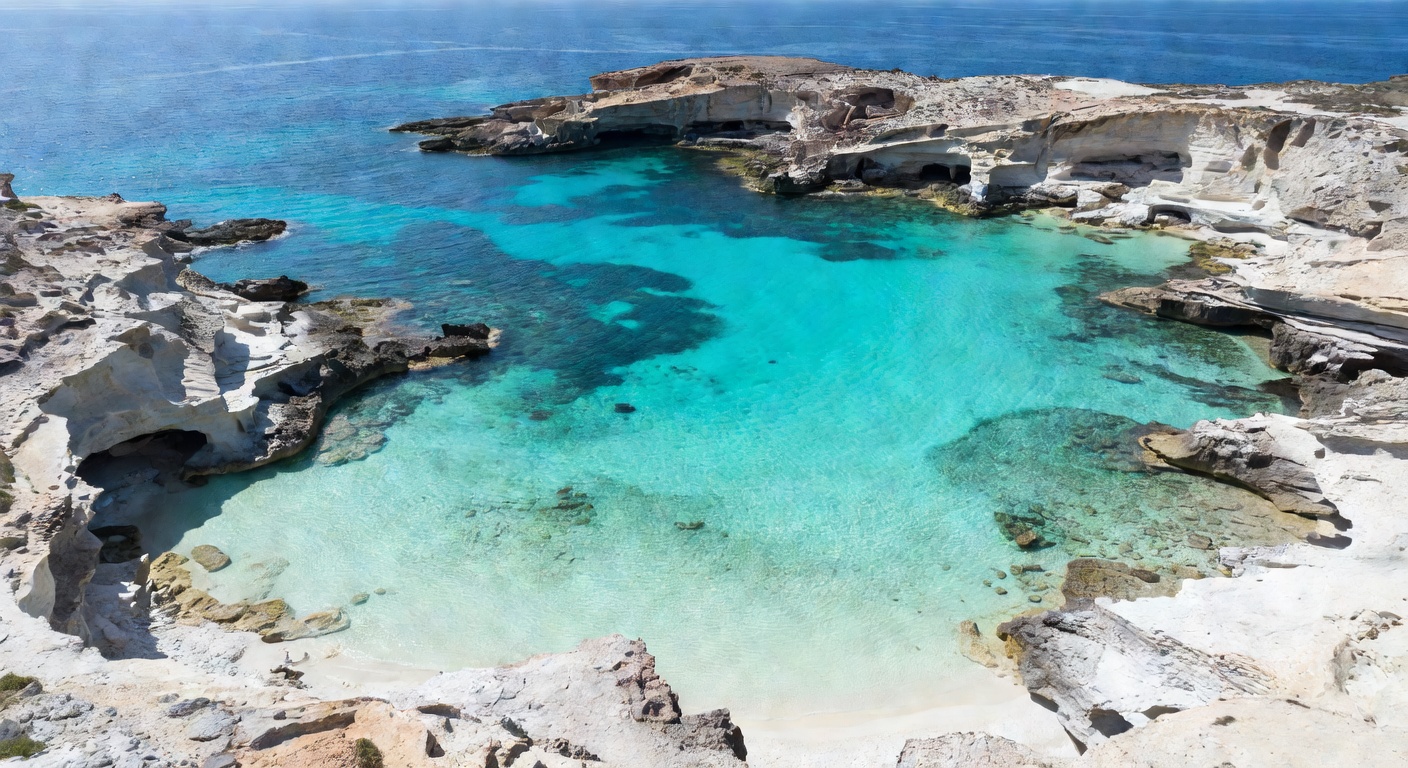
The Story of the Blue Lagoon
Nestled in the narrow channel between the tiny island of Comino and the even tinier islet of Cominotto, the Blue Lagoon is one of the most visually stunning natural swimming spots in the entire Mediterranean. The lagoon formed naturally where the shallow seabed of white sand and smooth rock creates a protected cove, resulting in water so clear and luminous that boats appear to float on air.
Comino itself has a fascinating history. Named after the cumin that once grew wild across the island, it served as a hideout for pirates and smugglers for centuries. The Knights of St. John built the Santa Marija Tower here in 1618 to protect against Ottoman raids. At various points in history, Comino has been a quarantine zone, a prison island, and a military outpost. Today, it has just one permanent resident (or three, depending on who you ask), making it one of the most sparsely populated islands in the Mediterranean.
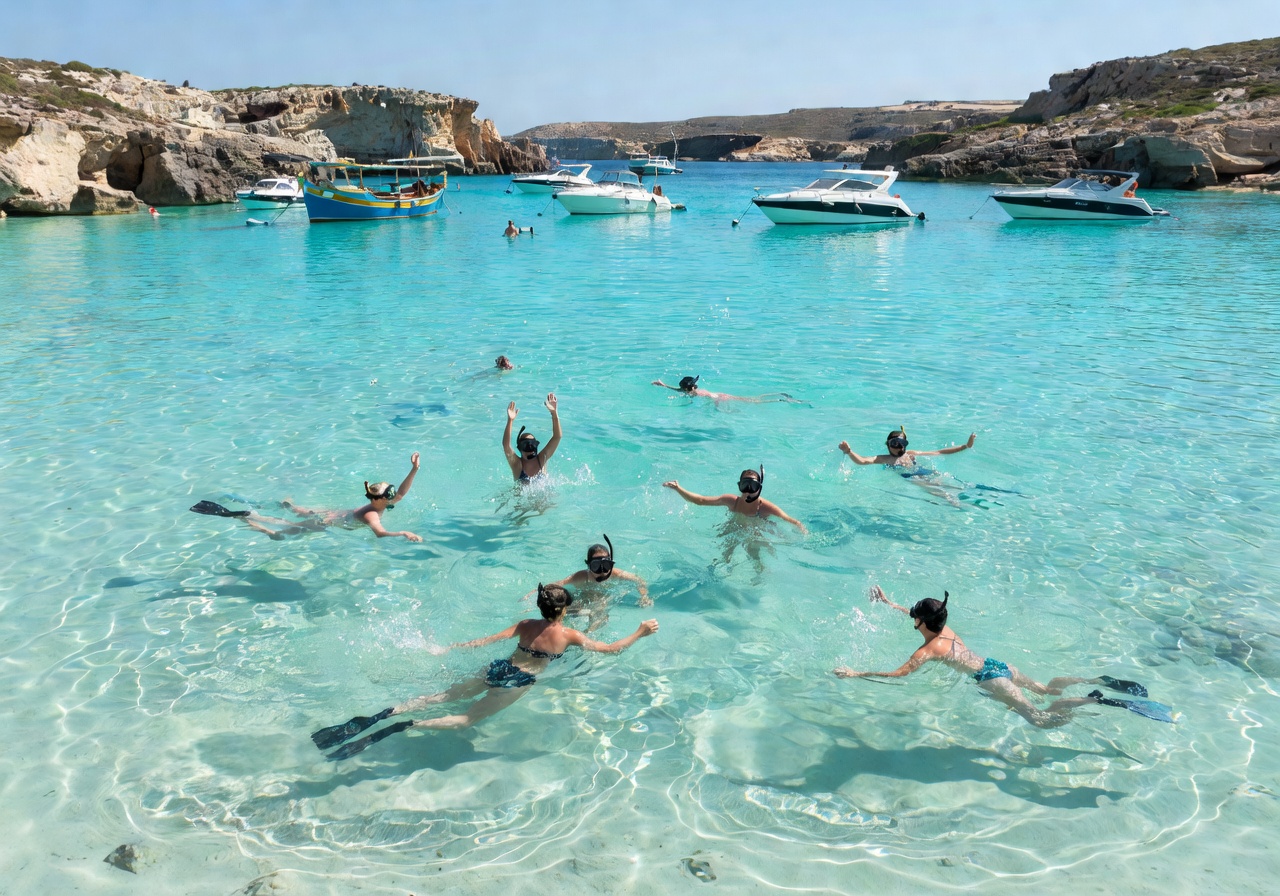 The water clarity at Blue Lagoon has to be seen to be believed
Why the Blue Lagoon Is Unmissable
Photographs of the Blue Lagoon are what first draw most visitors to Malta — but nothing prepares you for seeing it in person. The water shifts through an impossible spectrum of colours: from deep emerald at the edges to luminous aquamarine in the shallows, to an almost white-turquoise where the sand is brightest. On a calm day, visibility extends to 30 metres or more, revealing a seabed alive with fish, sea urchins, and waving sea grass.
Beyond the lagoon itself, Comino offers surprisingly excellent hiking along cliff-top paths, hidden caves accessible by swimming, and the kind of raw, undeveloped Mediterranean landscape that has become increasingly rare. For snorkellers and divers, the surrounding waters are a paradise — the Santa Marija Caves, Crystal Lagoon, and various reef systems are all within easy reach.
How to Get to the Blue Lagoon
- From Ċirkewwa (Malta): Regular ferry and speedboat services run from Malta's northernmost tip. The crossing takes 20–25 minutes by ferry or 10 minutes by speedboat.
- From Mġarr (Gozo): Boats also depart from Gozo's main harbour, making it easy to combine with a Gozo visit.
- Day cruise: Many operators offer full-day trips including lunch, stops at sea caves, and time at the lagoon.
- By kayak: For the adventurous, kayak tours from Malta's north coast to Comino are available and unforgettable.
Best Time to Visit the Blue Lagoon
For the best experience: arrive as early as possible. The first boats leave at 9 AM, and between 9–11 AM, the lagoon is relatively peaceful. By midday in summer, it can become very crowded with boats and swimmers. The water is at its clearest and most colourful in the morning light.
Season-wise: Late May to early June and September to mid-October offer the best balance — warm enough for swimming, but without the peak-summer crowds. July and August are the busiest months; the lagoon can feel overcrowded, though the water is at its warmest (25–27°C). The boat services generally run from April to November.
Insider Tips for the Blue Lagoon
- Bring water shoes — the rocky shore can be sharp on bare feet.
- Arrive on the first boat of the day for the best experience.
- Bring your own food and water; the kiosks on Comino are limited and expensive.
- A snorkel and mask are essential — the underwater scenery is spectacular.
- Walk 10 minutes south along the coastal path to reach the Crystal Lagoon — far less crowded and equally beautiful.
- Consider an overnight stay at the Comino Hotel (the island's only accommodation) for sunset and sunrise at the lagoon in complete solitude.
- On weekdays, the crowds are noticeably thinner than weekends.
Hidden Facts About Comino
Comino is just 3.5 km² — you can walk around the entire island in about three hours. Despite its tiny size, it's a designated bird sanctuary and nature reserve, home to migratory birds, wild thyme, and rare species of lizard. The island was used as a location in the 2002 film "The Count of Monte Cristo." During WWII, the British military used Comino as an isolation hospital. And perhaps most delightfully, the island has zero cars, zero shops, and zero traffic lights — just sun, sea, and silence.
The Local Experience
The secret to enjoying the Blue Lagoon like a local is timing and exploration. Maltese families tend to visit on weekdays, bringing picnics and spending the whole day. They know the hidden spots: the flat rocks on Cominotto (reachable by a short swim) where you can sunbathe in near-solitude, the snorkelling channel between the two islands where fish congregate, and the walking trail to Santa Marija Bay on Comino's north side — a sandy beach that's far quieter than the main lagoon. If you can, take the last boat back rather than the first return; the afternoon light on the water is extraordinary, and you'll have the lagoon increasingly to yourself as the day-trippers leave.